Sunday, 30 March 2014

Cities Are Like Elephants: They Get More Economical With Size


Cities have long been compared to organisms—Plato talked about the city as a corporeal body, and the urban spaces we’ve created have come to resemble their creators. Structurally, they follow a distinctly biological design and obey the same metabolic laws that govern every organism. 

Below the skin and under the street lie the intestines, the metal intestines that allow suburbs to sprawl and skyscrapers to rise. The fiber-optic cables are nerves, and the subway tunnels are thick jugular veins. Energy is distributed, and waste is digested. All this generates a sort of animal heat, which escapes from the grates in the gutters. The foul steam is exhaled breath. But how true is this metaphor? Are cities really like living things?

A team of physicists and economists led by Geoffrey West of the Santa Fe Institute recently set out to answer these questions. It turns out that, in many respects, cities act just like creatures. They obey the same metabolic laws that govern every organism. Their infrastructure follows a distinctly biological design, which helps explain why cities are able to grow.


Read more here

Reinhard Krug's City Islands

Thursday, 20 March 2014

The Heritage of Goulburn

'From the Goulburn Desk 'by William Oxley


I’d like to discuss a topic that is particularly relevant to Goulburn, which is heritage. As a local government planner heritage is an important issue that consistently influences the decisions we make.

Heritage is such a deep and diverse aspect of planning that I could write pages and pages on the topic, however at this point I would like to focus on the main issue that heritage presents to a planner: conservation versus progression; essentially what are the advantages and disadvantages of preserving heritage sites? 

Wednesday, 12 March 2014

A Dictator's Guide to Urban Design

Ukraine's Independence Square, and the revolutionary dimensions of public spaces.

An aerial view shows Ukraine's Independence Square during clashes between anti-government protesters and riot police in Kiev, on February 19

Tuesday, 11 March 2014

Glimpsing a Lost Paris, Before Gentrification

Before Google Street View and 'Pegman' there was Charles Marville, a 19th-century photographer who was commissioned by the city of Paris to document both the picturesque, medieval streets of old Paris and the broad boulevards and grand public structures that Baron Georges-Eugène Haussmann built in their place for Emperor Napoleon III. 

Charles Marville: Place Saint-André-des-Arts (sixth arrondissement), 1865–1868, Musée Carnavalet, Paris

Friday, 14 February 2014

Docklands faces overhaul as Gehl report urges major changes


Y (p) Connect?

It’s that time of year again. Everyone’s back at work, uni is starting, and the traffic snarls and tram crushes are back with a vengeance. That week on the beach seems but an all too distant memory… But I’m excited - because it means that March is upon us! And that means its YP Connect time!

Wednesday, 12 February 2014

What's your Future City?

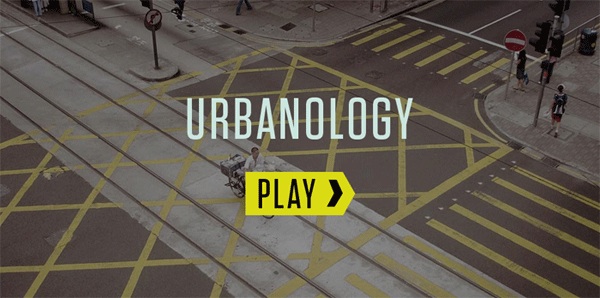
Check out the BMW Guggenheim Lab’s Urbanology game

The game seeks to teach players something about urban sustainability by asking them to give “yes” or “no” answers to a series of urban policy questions. It then produces some quick-and-dirty findings about the governing values implied by the answers, and identifies a real city that best matches those values. The eight values at issue are Affordability, Health, Innovation, Lifestyle, Livability, Sustainability, Transportation, and Wealth. Questions include items such as “Will you double the cost of public transport to fund its conversion to a carbon-neutral system?” or “Will you pay for a free bike service in your city”? Working with such yes/no dichotomies is not ideal, but it’s also not unreasonable as a starting point for conversation.